
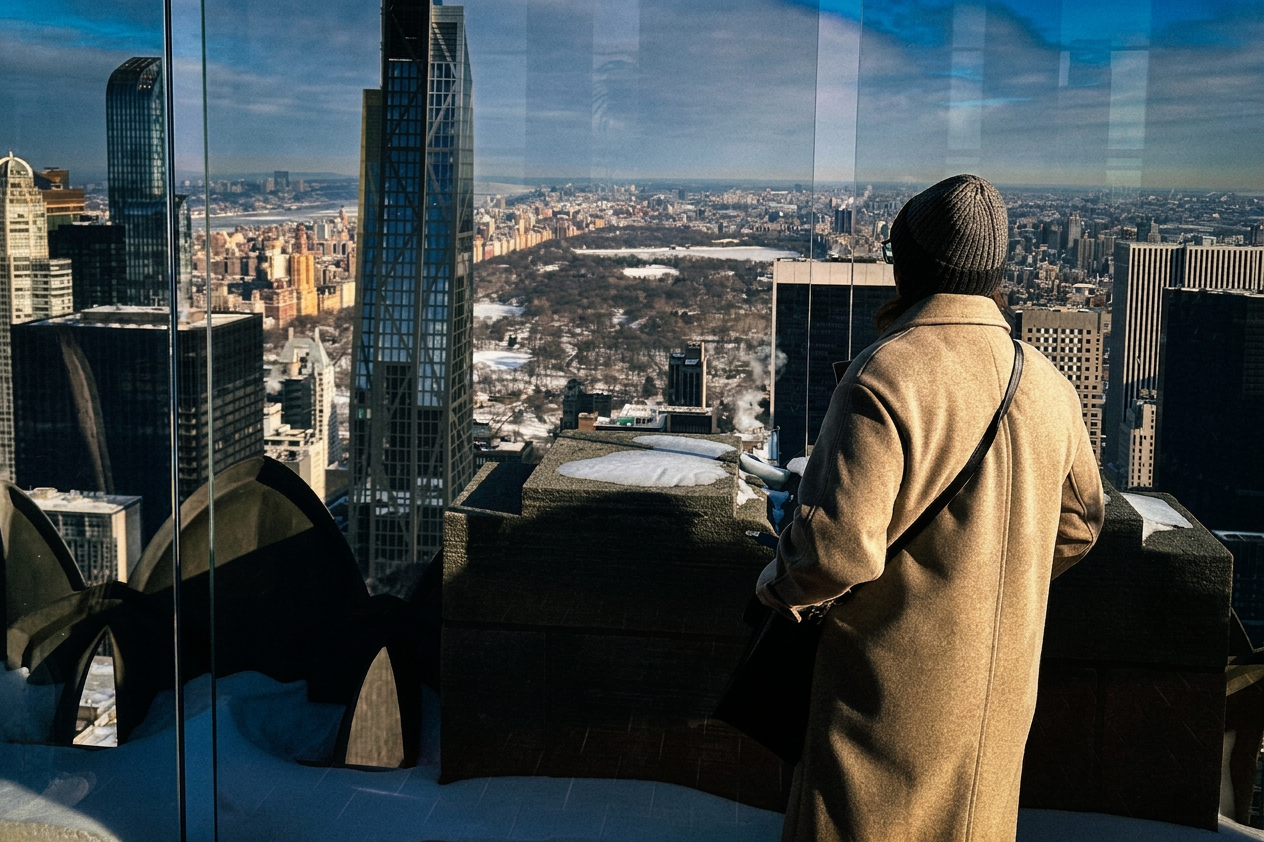
Central Park covers 693 acres and features approximately 58 miles of paths, bridges, arches, fountains, sculptures, and monuments. There are 21 playgrounds, a zoo, a castle, and ice rinks in the winter. But the most important thing isn’t captured in numbers. Central Park can quiet Manhattan without taking you out of Manhattan.
Four cross-town routes run through the park, connecting the east and west sides of the city. However, they are hidden in tunnels covered by greenery, so traffic does not disrupt the landscape. It takes just a few steps for the urban grid, the rush, and the street layout to fade away. Central Park is a place you can explore like an open-air museum, only without walls and without admission tickets.
This guide will take you through the four seasons and show you how to discover Central Park so that you don’t just see it, but truly experience it.
Central Park in a Nutshell: What You Should Know Before You Go In
Admission is free
Central Park is one of those places that doesn’t ask for a ticket but offers an extraordinary amount in return. You can enter at dawn, in the middle of the day, or at sunset – the park is open to everyone.
How to get there?
The easiest way is by subway, depending on which part of the city you’re in. The park stretches from 59th to 110th Street, between Fifth Avenue and Central Park West, so there are plenty of entrances. No matter where you are in the city, you’ll almost always find a subway station within a few minutes’ walk.
Streetlights act as a map
This is one of Central Park’s most practical yet least-known tricks. Each streetlight has its own number – the first two or three digits indicate the nearest cross street, and the last digit reveals which side of the park you’re on: even numbers mean east (the Fifth Avenue side), odd numbers mean west (the Central Park West side). If you lose cell service or your phone battery dies, the streetlights act as an analogue GPS and can help you find your way around.
Accessibility and Getting Around
Central Park has hills, bridges, and stairs, but it also has many gently sloping paths accessible to strollers and people with limited mobility. With a little planning, you can map out a comfortable route without steep inclines.
The Many Faces of Central Park
It’s not just one park, but many microcosms. Sheep Meadow and the Great Lawn resemble vast urban living rooms on the grass. The Conservatory Garden is an elegant, formal garden. The Ramble is a dense, almost wild corner perfect for birdwatching. Around Turtle Pond, you can spot turtles basking in the sun, and Harlem Meer has a peaceful, local vibe in the northern part of the park.
If you only have one day: a year-round selection of Central Park classics
Certain spots in Central Park have a timeless quality. Whether you visit in the middle of summer or on a frosty winter morning, they never disappoint. If you only have one day to spend in the park, these are the places to start.
Bethesda Terrace and Bethesda Fountain
This is one of the most iconic spots in Central Park – not just for its architecture, but also for its atmosphere. Monumental staircases, carved details, arcades, and musicians playing beneath the vaulted ceiling create a scene that can be both monumental and very human. In the morning, the area is quiet and bathed in soft light; in the afternoon, the place comes alive with energy and sound as artists, strollers, and photographers arrive.
Bow Bridge and The Lake Area
One of the most beautiful bridges in all of New York, and it’s hard to call that an exaggeration. It’s one of the park’s most photogenic spots.
Belvedere Castle
A castle right in the middle of Manhattan sounds like something out of a fairy tale, but that’s exactly why it works so well. It’s a great landmark and one of the best vantage points in Central Park – perfect if you want to see the park from a slightly higher perspective.
Sheep Meadow and Great Lawn
New York’s two great “breathing spaces.” This is where locals spread out blankets, read books, eat, chat, or simply do nothing. And in a city that never slows down, doing nothing can be the greatest luxury.
Conservatory Water (72nd–75th Street)
A charming, seasonal pond, known among other things for its iconic movie scenes. In the warmer months, you can watch model sailboats here, and in winter, the sheet of water and surrounding trees create a peaceful, almost nostalgically elegant scene.
Looking for more ideas to make the most of your New York trip? Read my guide New York Without Overspending: How Much Does a Trip to NYC Really Cost? where I break down real travel costs, share my favourite discoveries and explain where spending more is actually worth it.
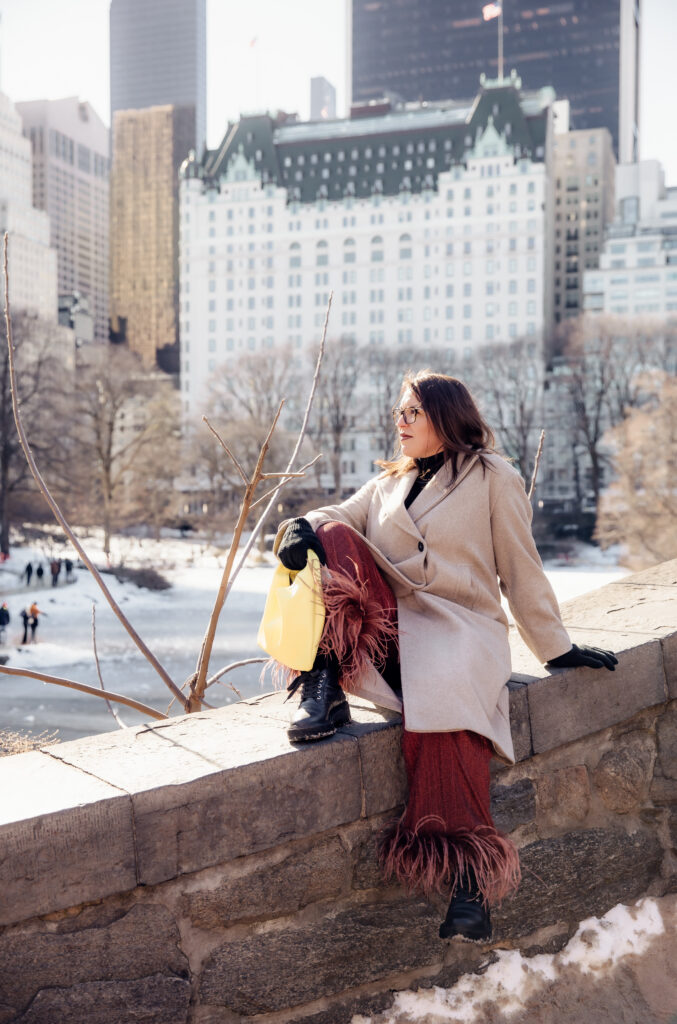


Spring in Central Park. When the city breathes again
Spring in New York is like the first sip of coffee after a long night. Suddenly, everything awakens – people emerge from their homes, trees burst into green, and Central Park once again becomes the most pleasant place “between” everyday life and a breath of fresh air.
Conservatory Garden
If you want something more Vogue Travel than a “top 10 attractions” list, this is it. This formal European-style garden is orderly, peaceful, and photographs beautifully in the soft morning light. The perfect place for a slow start to the day.
The Mall and Literary Walk
A long, straight avenue lined with elm trees creates the effect of a natural canopy. In spring, it’s pure romance, even if you’re strolling solo. The light, the greenery, and the perspective do all the work here.
Birdwatching in The Ramble
You don’t need binoculars or a bird guide. Just step off the main paths and into the park’s wilder areas. The Ramble has a semi-woodland atmosphere that makes you forget you’re in the middle of the city.
The first picnic of the season
Sheep Meadow in the spring acts like a magnet. All you need is a blanket, something simple to eat, and a moment without a plan. It’s worth arriving early, before the lawns fill up with people.
Summer in Central Park. The best thing when it’s hot and loud
Summer in New York can be intense. Hot, sometimes muggy, but also full of energy. Central Park then becomes the stage for urban rituals.
Shakespeare in the Park (Delacorte Theatre)
One of the most iconic summer experiences. Free open-air theatre performances have been attracting both New Yorkers and tourists for years. It’s worth checking the ticket rules in advance. The logistics require a bit of planning, but the atmosphere makes up for everything.
Boats on the lake – Loeb Boathouse
Renting a boat is a classic. There’s something timeless about rowing on The Lake. The best time? Late afternoon, when the light softens and Manhattan in the background looks calmer than usual.
The Great Lawn as an urban luxury
This isn’t just any lawn. It’s the summer stage of New York City life. People lie on blankets, read, eat, chat, or simply gaze at the sky. And that’s exactly what it’s all about.
Central Park Zoo
Small, but perfect for a shorter visit, especially if you’re traveling with kids or want to mix up your day with something other than walking.
Autumn in Central Park. The most beautiful season (no question about it)
Autumn in Central Park is spectacular. Gold, red, and light create a scene that looks almost unreal. And the temperature is perfect for long walks.
Bow Bridge and The Lake
If you want a route that always looks good, this is the one. Reflections in the water, golden trees, and the bridge’s distinctive silhouette create a scene that needs no filters.
The Ramble in autumn colors
In the autumn, this part of the park transforms into a palette of colors. It’s wild, picturesque, and very atmospheric.
A stroll along the museums
The eastern side of the park leads straight to New York’s major cultural institutions. It’s the perfect plan for a day combining nature and art. And on the western side, near Central Park West, lies the famous Museum of Natural History. In the fall, it’s the perfect combination, because you don’t feel like you’re “wasting” the good weather indoors.
Winter in Central Park. Light, ice, and quiet walks
In winter, the park reveals a different face – harsher, yet exceptionally beautiful. The trees are bare, the architectural lines are more distinct, and the light is sharper.
Ice Rinks: Wollman Rink and Lasker Rink
Wollman Rink is an icon, and the Manhattan skyline in the background looks like something out of a movie. Lasker Rink is often a quieter alternative. Hours and seasons may vary, so it’s worth checking the latest information before heading out.
A Stroll Without a Plan
In winter, the park reveals its structure. Bridges, stairs, arches, and sculptures are more visible without the leaves. It’s the perfect time for a leisurely exploration.
Central Park Zoo
When the temperature drops, the zoo is a good stop for a shorter visit and an excuse to warm up along the way.
Central Park with kids. No stress, but with a good plan
Central Park has 21 playgrounds, so it’s easy to be tempted to “check off as many as possible.” But in practice, the best strategy is much simpler: choose one playground along the way to the places you want to see anyway, and don’t try to do everything at once. This is a park that works better with a “less is more” approach.
A good plan for 3–4 hours might look like this:
– a short walk toward Bethesda Terrace,
– one playground along the way (one is really enough),
– a quieter stop at Conservatory Water, where the kids can rest and the adults can catch their breath,
– the Central Park Zoo as an attraction if the younger ones still have energy,
– something simple to eat, preferably without a reservation and without time pressure.
This is a plan that lets you combine Central Park’s classics with kids’ energy without turning the walk into a logistical marathon.
Eating in and around Central Park. What makes sense during a break from walking
The most “New York” option is the carts selling hot dogs, pretzels, and ice cream that line the main paths. It may sound touristy, but in practice, this is exactly what the city on the move tastes like: fast, simple, and without unnecessary fuss.
However, if you’re in the mood for a break in a more “sit-down” style:
Le Pain Quotidien at Sheep Meadow
A comfortable, peaceful spot right next to one of the park’s largest meadows. The perfect moment to sit down, grab a coffee, and simply watch the daily rhythm of Central Park unfold.
Tavern on the Green
A New York classic and one of the most famous restaurants near the park. More of a “night out” than a quick break. A good spot if you want to combine a walk with a more elegant experience.
Options outside the park, but very close by
Around Central Park, a completely different side of the city begins – just as interesting, but more culinary and local.
Barney Greengrass
An Upper West Side icon. A classic Jewish deli that doesn’t pretend to be anything new, and that’s exactly why it works. New York in its most authentic, “unchanged” form.
Shake Shack at the American Museum of Natural History
The perfect combination with a visit to the museum. Quick, no reservations, no fuss – exactly how you often eat in New York between one plan and the next.
And that’s what’s most interesting about it: Central Park can be combined with any dining style and any budget. From a street hot dog, to coffee on the grass to an elegant dinner. In New York, nothing is “out of place”; it all depends on the pace you want to set for the day.
Central Park and the rest of New York. What else makes the trip complete
If Central Park is your oasis of calm, the rest of New York is pure energy. And it’s this contrast that works best – the interplay of silence and the city’s intensity. One day, a stroll through the park and a visit to The Metropolitan Museum of Art (The Met). The next – The American Museum of Natural History and a quick burger eaten on the go. On the third, a ferry ride to the Statue of Liberty and Ellis Island, if you’re in the mood for a classic New York experience with a historical twist.
And if you’re returning to NYC yet again, it’s worth getting off the beaten path and venturing beyond Manhattan. Brooklyn and Queens have a completely different pace – more local, less “postcard-perfect,” but often even more authentic. Different food, different evenings, different city lights.
Then Central Park ceases to be a “must-see” on the list of attractions. It becomes something much more important – a constant point of reference. A place you return to between your next discoveries in New York.