
New York is one of those cities shrouded in myths. One of the most common is the idea that, to experience it truly, you need an almost unlimited budget.
Accommodation can indeed cost more than in many European capitals, and the bill for dinner in Manhattan can come as a surprise. At the same time, New York has a certain quality that sets it apart from many other major cities.
Here, high spending doesn’t always translate into a better experience.
Every time I return to NYC, I see the same pattern. Tourists queue up for the same attractions, book tables at the same viral restaurants and pay more for locations that often turn out to be the least interesting parts of the city.
Meanwhile, some of my favourite memories of New York cost little or nothing.
A walk through Brooklyn at sunrise. A few hours spent in the galleries of Chelsea. The view of Manhattan from the deck of the Staten Island Ferry. An evening spent on the Brooklyn waterfront rather than on yet another paid observation deck.
The paradox of New York is that it’s not about how much you spend.
It’s about whether you spend your money in the right places.
Whether you’re planning your first trip to NYC or returning to the city yet again, this guide will help you plan your budget without missing out on the things that make New York special.


How much does a trip to New York cost in 2026?
It depends more on your travel style than on the city itself.
For most first-time visitors to New York, a realistic budget looks something like this:
Category Daily cost
| Hotel | $180–350 |
| Food | $40–100 |
| Transport | $5–15 |
| Attractions | $20–80 |
| Total | $245–545 |
For a week-long stay, this means a budget of around $1,700 to $3,800 per person, excluding flights.
Sound like a lot? That’s just how New York is.
You can have breakfast for a few dollars or spend the equivalent of your daily budget on a single brunch. You can stay near Times Square or choose a quieter part of Brooklyn and get much more for your money.
So rather than asking only about costs, it’s worth asking yourself another question:
What’s really worth paying for here?
The most expensive mistake on a first trip to New York
Many people planning their first trip to New York assume that the biggest challenge will be the budget. Meanwhile, I get the impression that we don’t lose the most money because of high prices, but because of the way we try to see everything at once.
New York can create a sense that every hour must be used to the full. The list of attractions quickly grows, and the daily plan begins to resemble a logistical puzzle.
Paradoxically, it is precisely then that the city becomes the most expensive and, at the same time, the least satisfying.
One of the things I like most about New York is that its greatest value is very often found between the attractions. In a stroll through the West Village, a morning coffee drunk in the park, a gallery stumbled upon in Chelsea, or a few extra minutes spent on the Brooklyn waterfront.
That’s precisely why I don’t recommend planning your New York trip minute by minute. It’s far better to pick a few places you really want to see and leave room for everything that can’t be planned.
Because the costliest mistake on a first trip to New York isn’t spending too much money.
It’s spending it in a hurry.
Where is it worth spending more, and where does it not make much sense?
One of the things that surprises me most about New York is how little the price has to do with the quality of the experience.
You can pay a few dozen dollars for yet another attraction and forget all about it a week later. Or you can spend very little and come home with a story you’ll be telling for years to come.
If there’s one thing I’d spend the bulk of my budget on, it would be accommodation in a good location. It’s not about a luxury hotel or a view from the window, but a place that allows you to get around the city comfortably.
It’s also worth setting aside some of your budget for one special experience. For some, that might be Broadway; for others, dinner at their dream restaurant or an evening spent in one of the world’s best museums.
However, it’s not worth paying for everything. Especially not for several observation decks during a single trip. If you’re dreaming of a city panorama, choose one and let it remain something special.
Planning a trip to New York? Explore Central Park: Your Ultimate Guide to NYC’s Oasis
How to get around New York without spending a fortune on transport
One of the biggest surprises for first-time visitors to New York is how rarely you actually need a car.
The city was built around the underground, and it remains the fastest way to get between neighbourhoods. A single journey costs around $2.90, and thanks to the OMNY system, all you need to do is tap your payment card or phone.
Of course, there are situations where an Uber makes sense. A late return to the hotel or a trip to the airport are good examples.
In practice, however, most visitors can easily spend their entire stay using only the metro and their own two feet.
And it is precisely this second part that is often underestimated.
New York is best explored on foot.
It’s a city where the journey between attractions can be just as interesting as the attractions themselves. A stroll through the West Village, Williamsburg or the Upper West Side lets you see a completely different New York from the one you see on postcards.
Where to eat well without overspending
Food is one of those expenses that can easily spiral out of control in New York. All it takes is a few trendy spots found on social media, and suddenly, you find your daily budget has been spent before you’ve even had dinner.
During my last trip, I discovered a few places that strike a good balance between quality and price.
In Brooklyn, it’s worth popping into Pierogi Boys, where for around $10–20 you can enjoy a filling meal without feeling like you’re paying for the hype or the location.
In Manhattan, Okonomi / Yuji Ramen turned out to be a great find. Depending on what you order, the bill usually comes to $30–50, which is a very fair price for that part of the city.
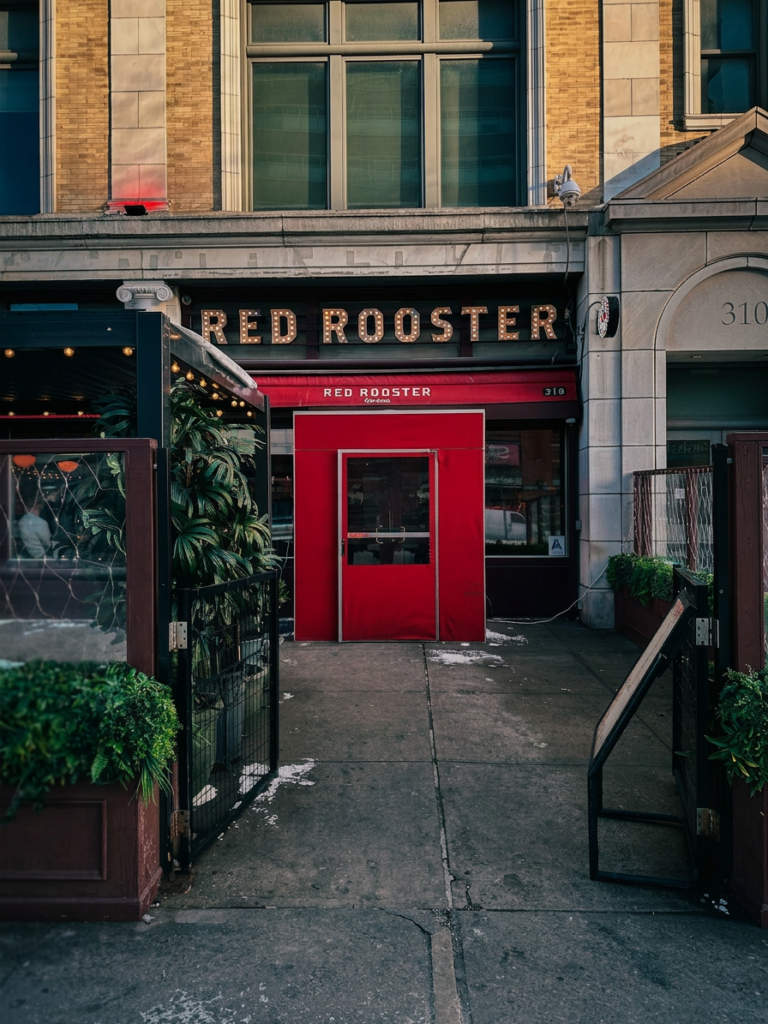
If you’re planning to visit Harlem, keep an eye out for Red Rooster. The lunch menu costs around $25–35, and most main courses fall within the $26–40 range.
The biggest lesson I learnt from New York is that good food doesn’t necessarily mean the most expensive places. Often, you just need to walk a few blocks away from the most popular spots to find restaurants offering much better value for money.

Is it worth buying a New York Pass?
This is one of the questions that regularly comes up before a trip to New York.
The answer is: it depends on how you plan to explore the city.
If you’re planning a very busy trip and want to visit several paid attractions every day, the New York Pass can offer real savings. However, if you prefer a more relaxed pace and don’t intend to tick off items on a list every day, individual tickets are often a better option.
There is, however, another option that many people aren’t aware of.
At the turn of January and February, the city organises annual promotional events such as NYC Must-See Week, Restaurant Week and Broadway Week. It is during these events that many attractions offer 2-for-1 tickets, meaning savings of up to 50% when travelling as a couple.
A similar principle applies to restaurants. Many of them prepare special menus at more attractive prices, allowing you to visit places that might otherwise be beyond your travel budget for the rest of the year. The same applies to Broadway shows, which are often available at significantly lower prices than usual.
Hotels are another advantage of this period. Depending on the location and standard, you can find deals that are up to 25% cheaper than during the peak months.
So, if you have flexibility in your travel plans, January and February may turn out to be one of the best times to visit New York.
It’s also worth remembering that some museums offer free entry or ‘pay what you wish’ schemes. However, the rules change regularly, so I always recommend checking the latest information on the official website of the place you’re interested in before your visit.
A good example is the Whitney Museum, which currently offers free entry to all visitors on Friday evenings, every second Sunday of the month, and every day for those under 25.
Where to stay in New York?
The choice of neighbourhood has a much greater impact on the comfort of your trip than the number of stars a hotel has.
On their first visit, many people automatically head for Times Square. Although the location looks ideal on the map, in practice it usually means higher prices, more noise and crowds practically around the clock.
I would much rather recommend a few other parts of the city.
Chelsea remains one of my favourite locations. It’s close to the High Line, art galleries, the Hudson River and many interesting restaurants. It’s a great base for exploring Manhattan.
The Upper West Side offers a completely different atmosphere. Quieter streets, the proximity to Central Park and a more local feel make it easy to experience the city’s everyday life.
Tribeca is one of the most elegant parts of Lower Manhattan. Historic buildings, great restaurants and a more relaxed atmosphere attract those seeking a slightly less obvious side of New York.
Nolita is small but full of cafés, boutiques and restaurants. It’s one of those neighbourhoods where it’s simply pleasant to wander around without a specific plan.
On the other side of the East River, Williamsburg is also worth considering. Just a dozen or so years ago, it was an alternative to Manhattan. Today, it has become one of the most sought-after addresses in the city, offering great dining, interesting shops and some of the best views of the Manhattan skyline.
Regardless of which neighbourhood you choose, when booking a hotel I pay attention to one thing above all else: the distance from the underground station. It is this factor that most often determines how comfortable your entire stay will be.
FAQ – frequently asked questions about a trip to New York
How much does a trip to New York cost in 2026?
For a week-long stay, a realistic budget is around $1,700-$3,800 per person, excluding flights. The final cost depends primarily on the standard of accommodation, the number of paid attractions and how often you plan to eat in restaurants.
How much does a week in New York cost for two people?
For two people travelling comfortably but without excessive spending, it’s worth setting aside a budget of around $2,300-4,400, excluding flights. During promotional periods, such as NYC Must-See Week or Restaurant Week, the cost can be significantly lower.
How much money should you take to New York?
Most places in New York accept card payments, so there’s no need to carry large amounts of cash. However, it’s worth leaving a little extra in your budget for spontaneous expenses, which crop up more often in NYC than you might expect.
Is New York expensive?
Yes, New York is one of the world’s most expensive cities. At the same time, it is a place where many of the best experiences cost little or nothing. A stroll through Central Park, the Staten Island Ferry or the art galleries in Chelsea often stay in your memory just as long as the most expensive attractions.
When is the best time to visit New York?
One of the most underrated times to visit is the end of January and beginning of February. During this period, events such as NYC Must-See Week, Restaurant Week and Broadway Week take place, offering 2-for-1 deals on attractions and shows, as well as special menus in restaurants. Additionally, many hotels offer lower rates during this time than at other times of the year.
Is it worth buying a New York Pass?
If you plan to visit many paid attractions in a short space of time, the New York Pass can help you save money. However, if you’re taking a more leisurely approach and don’t feel the need to visit several attractions every day, individual tickets often prove to be better value.
Is the New York subway safe?
I have never experienced a dangerous situation on the New York subway, and during my visits, I have not witnessed anything that made me feel threatened. At the same time, as in any big city – be it New York, London or Paris it is worth using common sense.
Don’t stand right at the edge of the platform, avoid empty carriages, and if you’re travelling alone late at night, consider an Uber. These are universal rules that apply when travelling in any major city.
Do you need a car to explore New York?
No. For most tourists, a car will be more of a hindrance than a help. The Underground is fast, relatively easy to use and allows you to reach the main districts and attractions comfortably.
Where is the best place to stay on your first visit to New York?
My favourite areas include Chelsea, the Upper West Side, Tribeca, Nolita and Williamsburg. Each of these neighbourhoods has its own character, good transport links and offers a slightly different view of New York than the one associated solely with Times Square.
How much does food cost in New York?
Breakfast usually costs around $10-20, lunch $15-30, and dinner from $30 upwards. Of course, prices can be both lower and significantly higher, but with sensible planning, you can eat very well without breaking the bank.
Is it possible to eat well in New York without spending a fortune?
Definitely. One of New York’s greatest assets is its culinary diversity. Often, you only need to walk a few blocks away from the most popular spots to find restaurants offering much better value for money.
Are museums in New York free?
Some museums offer free entry on selected days or at certain times, whilst others run ‘pay what you wish’ schemes. However, the rules change regularly, so it’s worth checking the latest information on the museum’s official website before your visit.
What free attractions are worth seeing in New York?
My favourites include the Staten Island Ferry, a walk across the Brooklyn Bridge, Brooklyn Bridge Park, Central Park and the art galleries in Chelsea. These are places that show you don’t need to buy a ticket for all the best experiences in New York.
How many days do you need to explore New York?
Your first visit should last at least 5-7 days. That’s enough time to see the main sights, whilst still leaving room for spontaneous exploration of the city without constantly rushing.